Pac-Man took in about a billion dollars in quarters in its first year in America, and nobody standing at the machine thought of it as a payment plan. It was what the change in your pocket was for.
GenX has paid for games just about every way there is: a coin at a time, fifty dollars up front, and nothing at all until the free part won us over. Most of us still play. We just don't pay full price much.
The arcade ran on quarters
A quarter bought you three lives, and when the third one went you checked your pocket. Space Invaders got so busy in Japan that people still tell a story about it causing a shortage of 100-yen coins. Nobody has ever proved that one, but nobody starts a rumour like that about a game sitting unplayed in the corner.
Then the cartridge cost fifty dollars
Home consoles turned it around. An NES cartridge in 1988 cost somewhere between $30 and $60, which is well over a hundred dollars in today's money, and you paid all of it before you'd pressed a button. If the game was bad, it was bad in your house for a year, and you played it anyway because you'd paid for it. The big releases still sell that way, at seventy dollars and up.
The text games made you type
Zork came out in 1980, and there were no pictures. It told you that you were standing in an open field west of a white house, with a boarded front door, and you typed what you wanted to do about it. It understood whole sentences, which felt a lot like the computer was listening. Commercial versions of Zork sold more than 800,000 copies through the 1980s, and a good share of the people who bought them drew their own maps on graph paper.
There's a door in Alderhoard that opens onto a shelf of text adventures in the old style, for anyone who misses typing GO NORTH.
Myst for the quiet ones, Doom for the loud ones
1993 gave the PC two hits that had nothing in common. Myst was an island you wandered in silence, clicking on things and reading old books, and it was the best-selling PC game there was until The Sims passed it. Doom was the other thing entirely, and it got to most of us the same way: somebody handed us a disk.
Doom gave its first episode away
id Software released Doom as shareware. The first episode, nine levels, was free, and people copied it and passed it around. The other two episodes you ordered by mail. id figured only about 1% of the people playing the free part bought the rest, and in the early days that 1% brought in around $100,000 a day.
A lot of us got our first PC games exactly this way: play the free part, and if it was good, send the people who made it some money.
How we've paid for games
- 1980, the arcade
- A quarter a game, as often as you liked
- 1988, the cartridge
- $30 to $60, all of it up front
- 1993, the shareware disk
- The first part free, the rest by mail
- Now
- A few dollars at a time, whenever you feel like it
GenX still plays, and still finishes things
IGN, Kantar and UC Berkeley asked thousands of committed players in the US, the UK and Australia how they buy games, and published the answers in May as Generations in Play. Only 20% of GenX said they'd buy a game at full price, against 42% of Gen Z. GenX said it prefers playing alone, and GenX and Millennials are the ones who go back to a game to finish it or get good at it.
Younger players pay for games a few dollars at a time, the way you'd grab lunch, and think nothing of it. To anyone who grew up on quarters, that's the arcade again, with a better chair.
Alderhoard works like the shareware disk
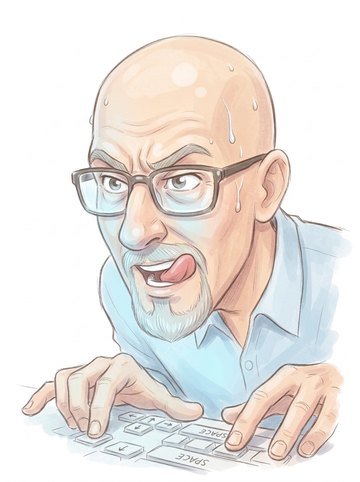
Alderhoard is the game I'm making: a valley you walk around in your browser, with cabinets in the Arcade full of old games with new physics. The valley is free. Forty Stonebreaker walls and ten 3D Waka levels are free, and they stay free. There's a Ko-fi if you'd like to chip in, a little at a time.
Four arrows and a space bar. Play Alderhoard, and if you'd like to tell me which of the old games you liked, there's the GenX Games Survey.
Sources
- When Pac-Man Pushed Arcades to Their Peak, The Saturday Evening Post
- The enduring legacy of Zork, MIT Technology Review
- Myst, The Strong National Museum of Play
- Doom (1993 video game), Wikipedia
- 62% of hardcore players no longer buy full-price games, Video Games Chronicle, on Generations in Play